
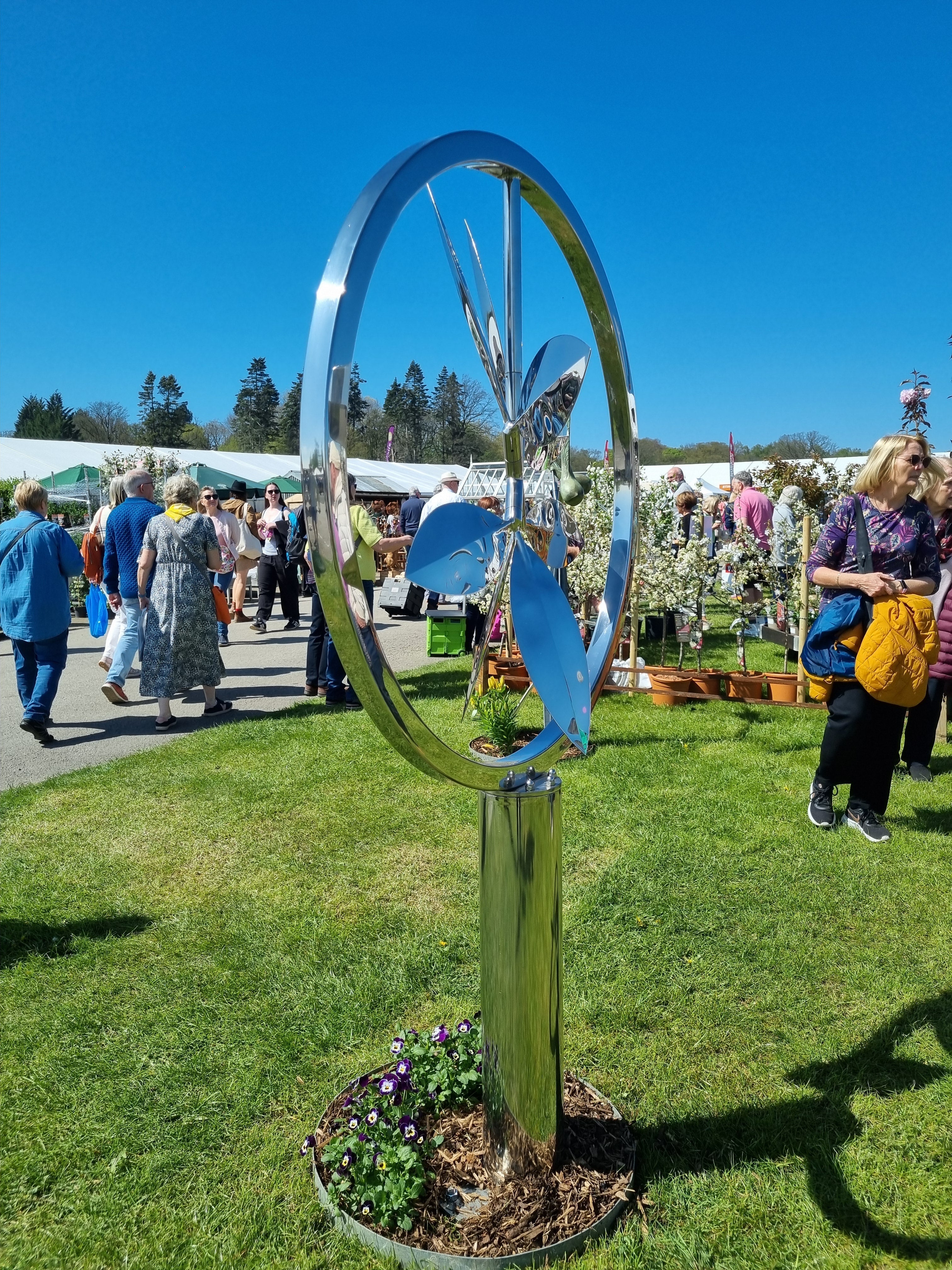
Why Garden Shows Continue to Draw the Crowds
There is something reassuring about walking through a garden show in person.
Not simply because of the gardens themselves, but because they bring together so many people who care deeply about plants, craftsmanship, wildlife, and the quieter details that shape outdoor spaces over time.
Over the past few weeks, we have had the opportunity to attend both the Harrogate Spring Flower Show and the BBC Gardeners' World Spring Fair. While different in scale, both shared the warm and welcoming atmosphere you would hope to find at such events. More importantly, they each reminded us that gardening remains deeply connected to people, place, and community.
At a time when so much is experienced through screens, there is still enormous value in physically walking through a garden, hearing water move through a landscape, noticing pollinators already working newly planted borders, or standing close enough to appreciate the texture of a handmade piece of garden craftsmanship.
Gardens Designed With Intention
One of the strongest themes throughout both events was the growing sense that gardens are increasingly being designed with intention and purpose.
Not simply as decorative spaces, but as places that support wildlife, encourage people outdoors, create moments of calm, and reconnect us with seasonal change.

The Hillier quad garden at the BBC Gardeners' World Spring Fair demonstrated this particularly well. Four distinct spaces — a family garden, potted garden, urban jungle, and cottage garden — each approached differently, yet all planted in ways that quickly drew in bees and insects to their temporary oasis.
Elsewhere, the BBC "Make a Metre Matter" garden quietly demonstrated how much can be achieved in even the smallest space. A series of one square metre sections showed how food growing, habitat creation, water, and pollinator planting can all sit alongside one another without requiring vast gardens or dramatic rewrites of existing spaces.

It aligned closely with something we have long believed ourselves — that meaningful gardening does not necessarily come from doing everything, but from doing small things intentionally.
Wildlife Is At The Forefront Of Gardeners' Minds
Perhaps the most encouraging thing to see was that wildlife-friendly gardening no longer feels separate from mainstream garden design.
Pollinator planting, water features, naturalistic planting styles, insect habitats, and softer edges were not hidden away as specialist features. They were integrated naturally into display gardens, planting schemes, and educational spaces throughout both events.
This shift matters.

For many years, wildlife gardening was sometimes presented as something untidy, neglected, or entirely separate from more structured garden design. Increasingly, the two are working together.
Gardens can still feel elegant, intentional, and carefully designed while also supporting birds, insects, hedgehogs, amphibians, and wider biodiversity.
It is clear that the growing movement to find balance is gaining traction.
Craftsmanship Matters
Alongside the planting, there was also a strong appreciation for natural materials and British craftsmanship.

Across both shows there were blacksmiths, sculptors, nursery growers, garden furniture makers, copper artisans, and specialist craftspeople producing pieces designed not simply to decorate gardens, but to settle into them and improve over time.
That slower approach to gardening — choosing fewer things, but choosing them carefully — feels increasingly valuable.
Good gardens are never created instantly. They are lived in spaces, where you can feel the passion that has been put into every detail.
They evolve gradually through planting, weather, maintenance, mistakes, experimentation, and patience.
The best pieces within them often come from that same experience, grit, and heart.
A Sense Of Encouragement
Perhaps most importantly, both events felt inspiring and full of encouragement.
There was enthusiasm from growers, designers, colleges, charities, and visitors alike. Students proudly sharing their display gardens, such as this one created by Merrist Wood College.

Small nurseries carefully presenting their plants. Wildlife organisations demonstrating practical changes people can make at home, where even a single plant or small access point can make a powerful difference when multiplied across the approximate 30 million gardens within the UK.
It was a reminder that gardening remains one of those great things capable of bringing together beauty, ecology, craftsmanship, wellbeing, and community in such a tangible way.
We would also like to extend our thanks to the BBC Gardeners' World team for the warmth and encouragement shown during our visit to the Spring Fair. It left a genuine impression, and we very much look forward to meeting the team again at Gardeners' World Live at the NEC Birmingham.
Looking Ahead
Like our gardens, these shows evolve over time, and their importance remains.
They allow people to experience gardens properly — not as perfectly curated images online, but as physical spaces filled with movement, scent, sound, texture, weather, and life.
And perhaps most importantly, they continue to send people home inspired to plant something, build something, support wildlife, or simply spend a little more time outdoors.

That matters enormously.

Written by Simon Stevens

Leave a comment
This site is protected by hCaptcha and the hCaptcha Privacy Policy and Terms of Service apply.