
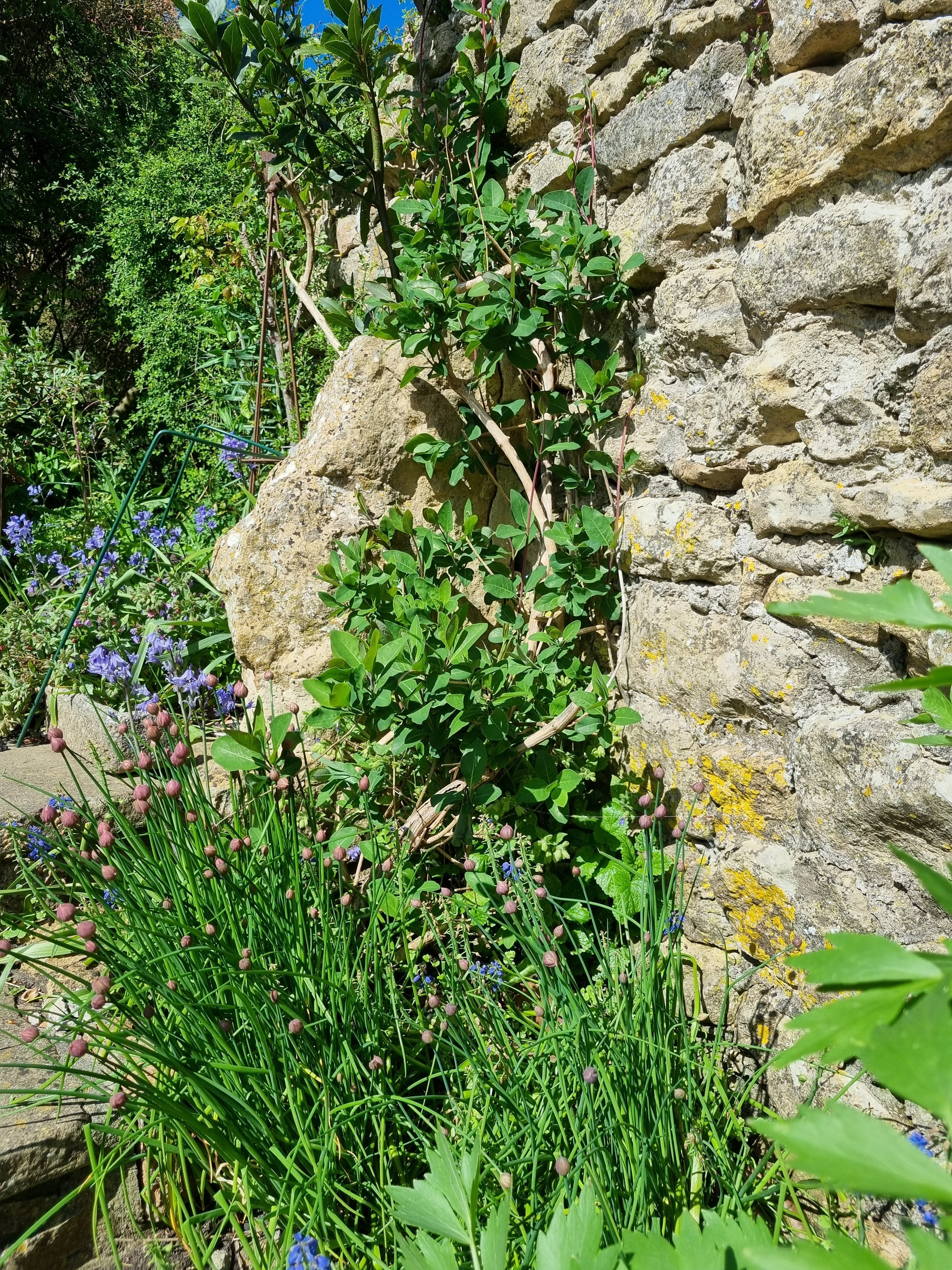
One Small Garden
There is a tendency to think that meaningful change in the natural world happens elsewhere.
In larger places. Across wider landscapes. At a scale that feels beyond the reach of any one individual.
And yet, the garden — however small — holds more influence than it is often given credit for.
Across the UK, there are over twenty million gardens. Taken together, they cover a greater area than all the nation’s nature reserves combined. Not as a single landscape, but as a network — fragmented, varied, and entirely shaped by individual decisions.
Each one is small in isolation, but collectively, they form something much larger.

It does not require the complete rewilding of a garden to contribute to this. In fact, the idea that everything must be undone and returned to a wild state can often become a barrier rather than a solution.
The reality is simpler, and more accessible.

A single flower, chosen for its value to pollinators.
A small opening left at the base of a fence, allowing movement for hedgehogs.
A nesting box, placed carefully and left undisturbed.
A pile of cuttings, or a dead hedge, allowed to remain rather than cleared away.

None of these are large gestures, and individually they might seem inconsequential — but they are not.
As Kate Bradbury writes in The Wildlife Gardener, even the smallest garden can play a meaningful role in supporting wildlife. It is not the size of the space that matters, but how it is used.
And as Monty Don has often observed through his writing and broadcasting, gardening with intention is one of the most important things any one of us can do.

Intention changes everything. It shifts a garden from being purely decorative to something that participates in a wider system — allowing space for insects, which in turn support birds, and creating shelter, food, and movement. In small ways, it begins to restore parts of a much larger imbalance.

If that intention is repeated — across millions of gardens — the effect is no longer small.
It becomes cumulative — a network of habitats, a distributed food source, and a quiet but significant shift in how land is used and understood.
And perhaps just as importantly, it changes how we relate to the space we care for.
Not as something separate from the natural world, but as part of it.
One small garden does not need to do everything.
It simply needs to do something.


Written by Simon Stevens


Leave a comment
This site is protected by hCaptcha and the hCaptcha Privacy Policy and Terms of Service apply.