
Swan River Daisies Mixed
Swan River Daisy 'Mixed' Seeds
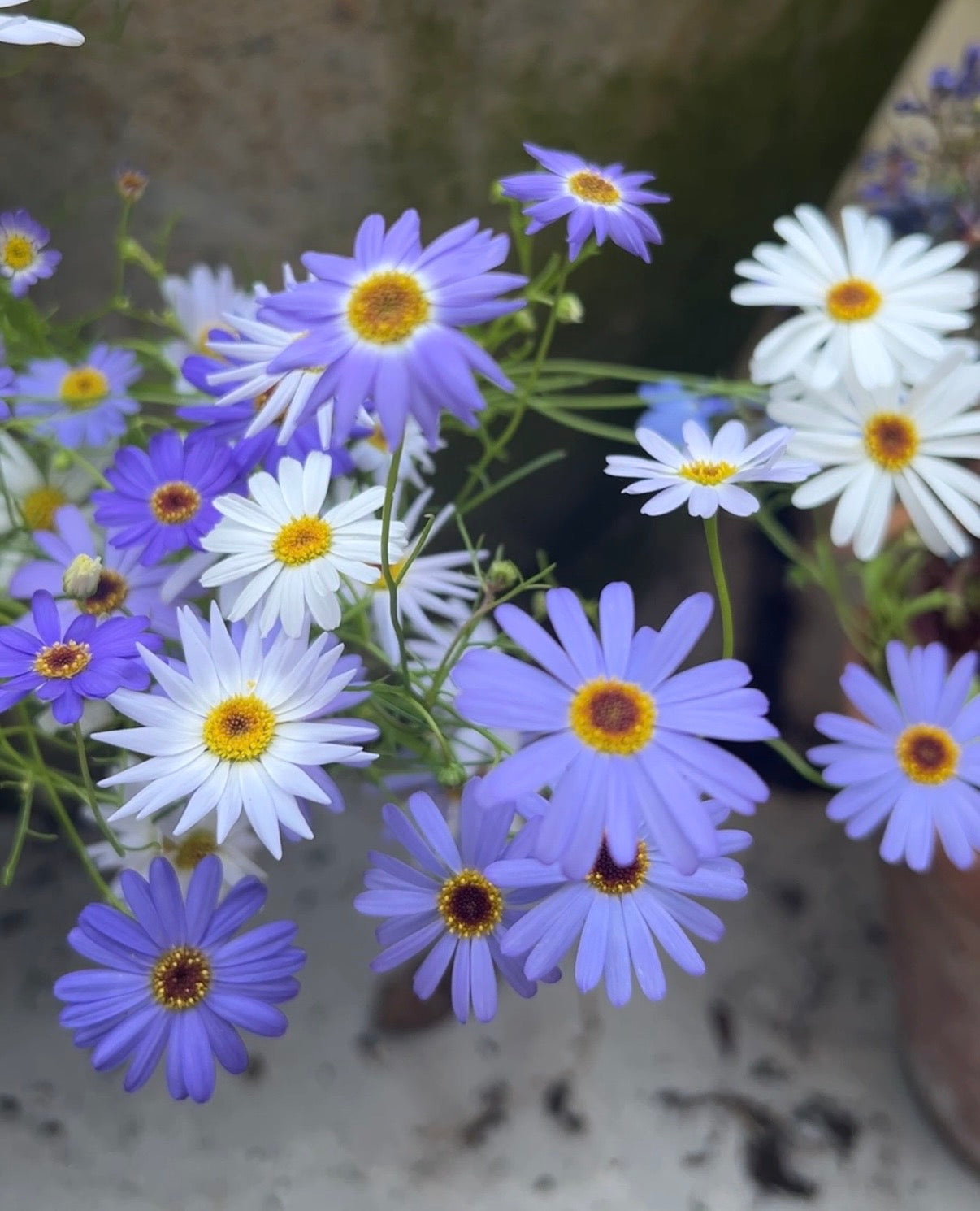
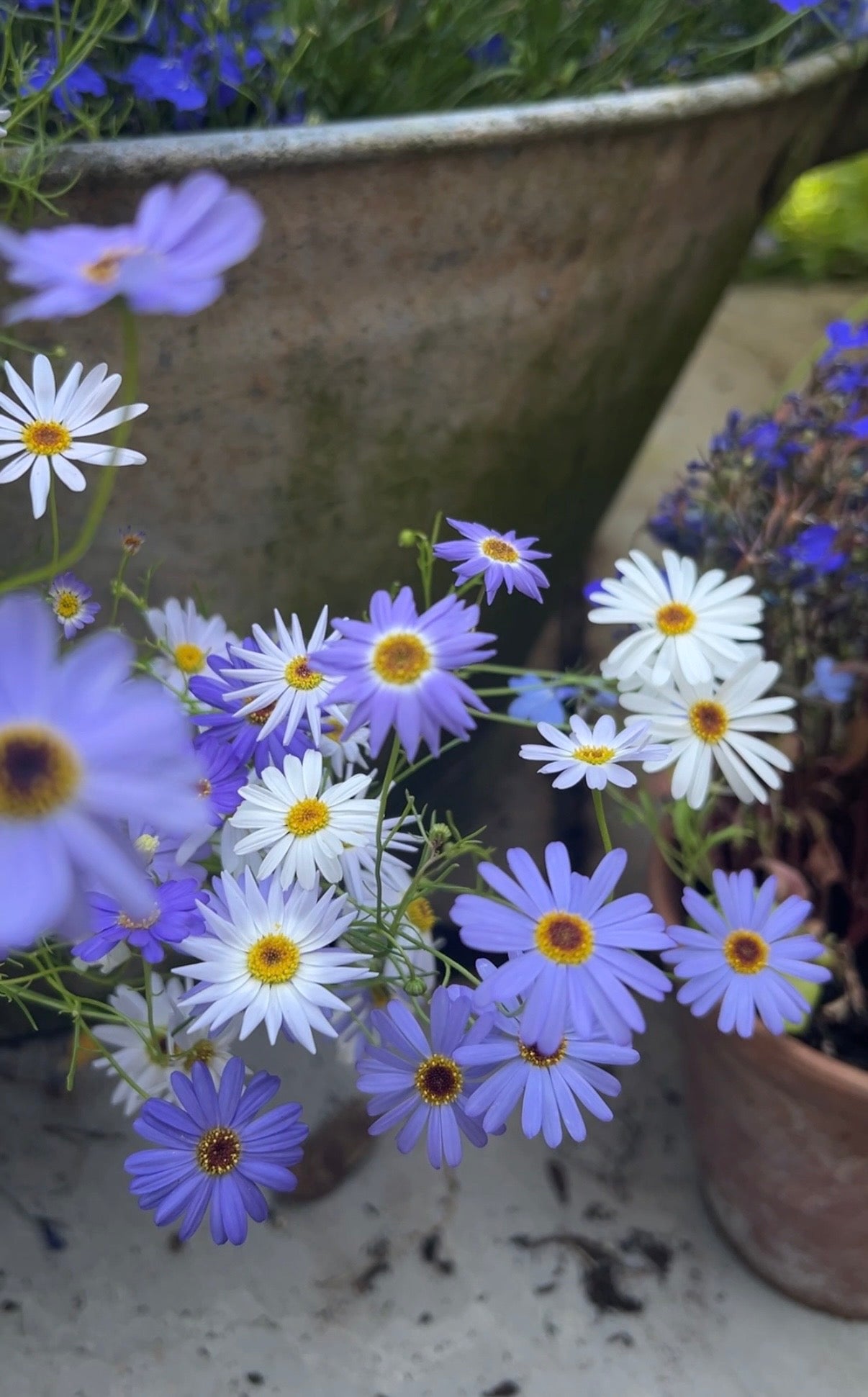
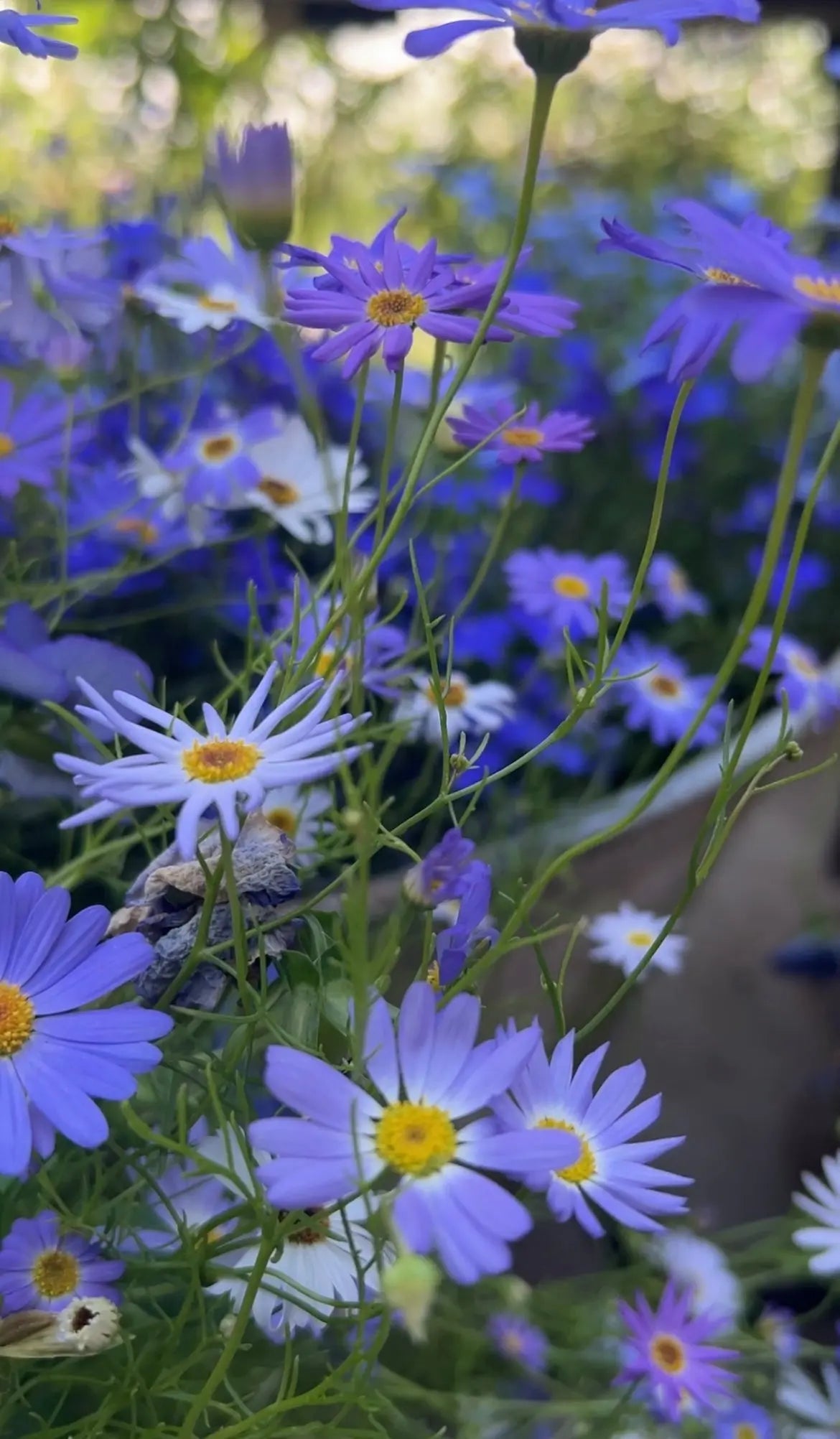
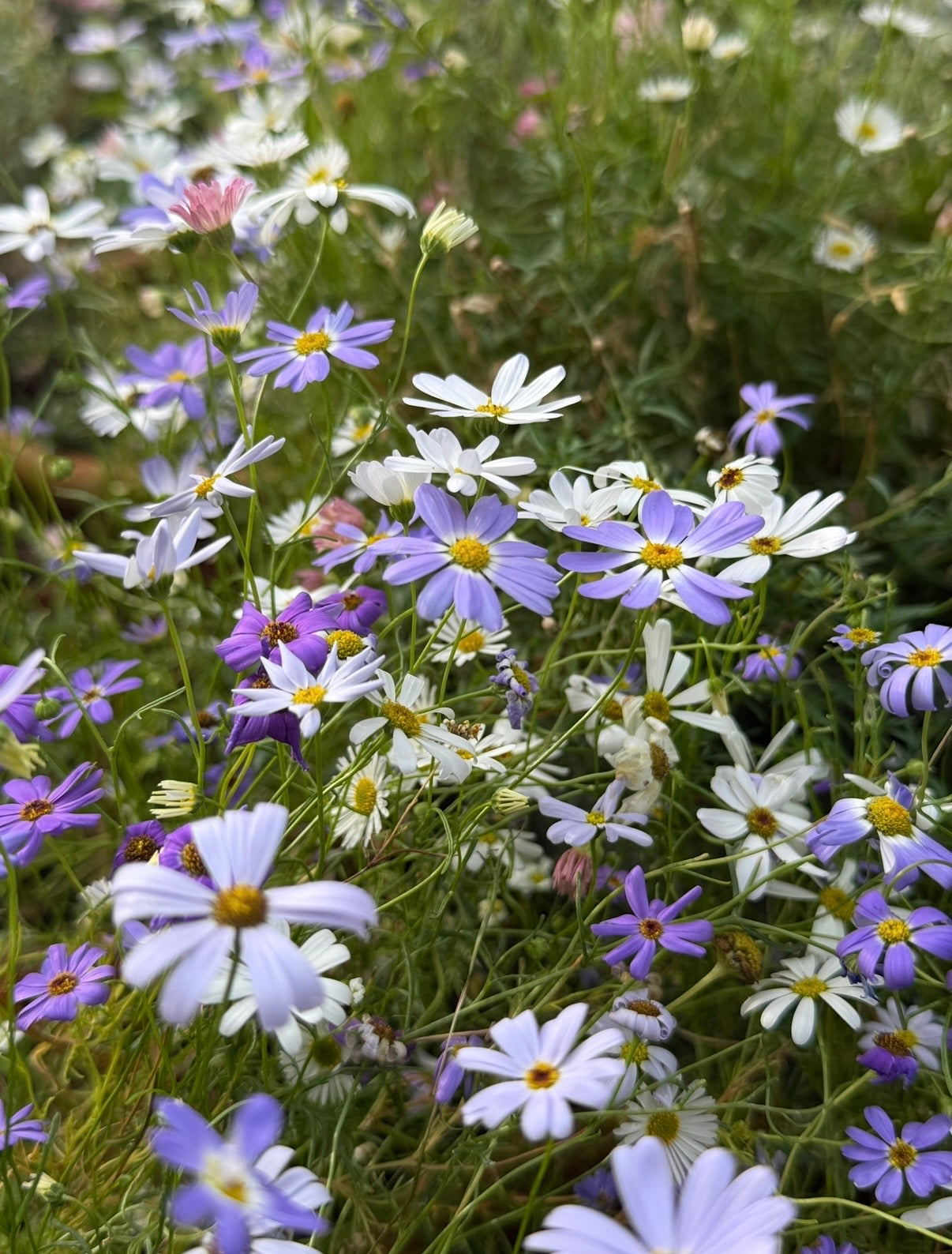
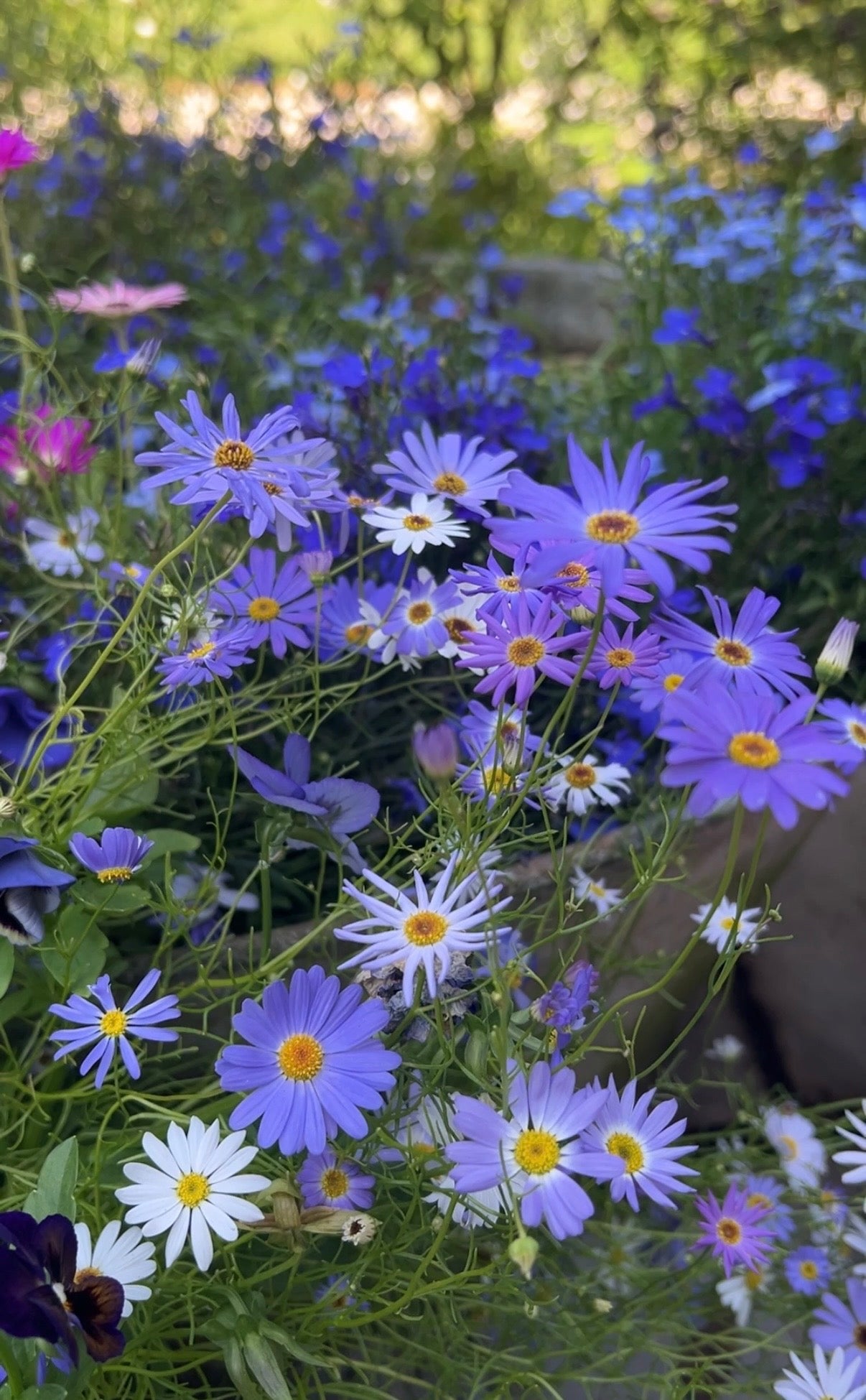
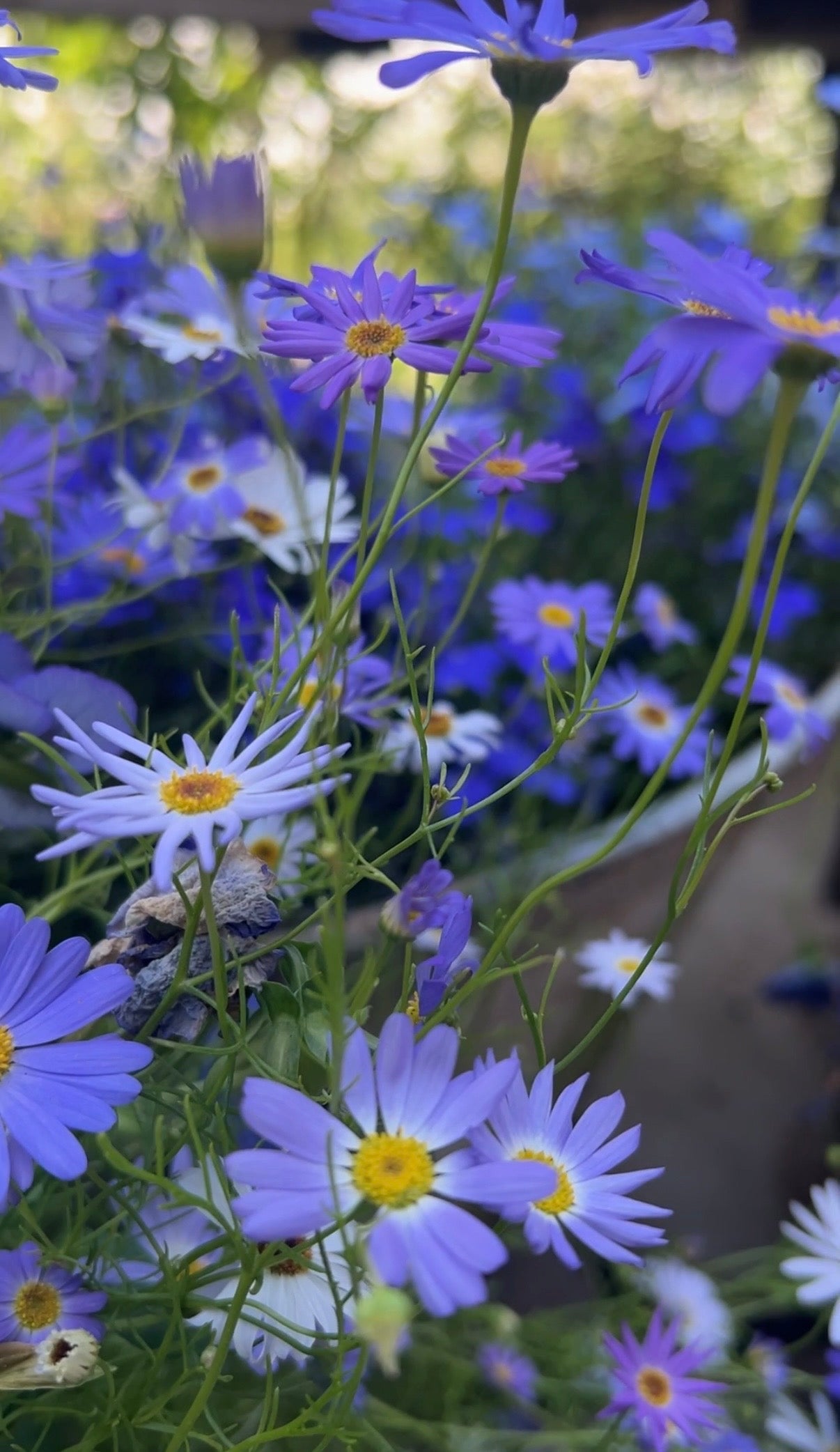
Masses of tiny, star-like daisies in soft shades of mauve, blue, white, and pink, floating in a soft green haze of feathery foliage. This charming Australian native forms a compact, misty cloud of colour that cascades beautifully from hanging baskets and sun-drenched containers all summer long.
Brachyscome iberidifolia, or the Swan River Daisy, is a charming Australian native that produces masses of tiny, star-like daisies in soft shades of mauve, blue, white, and pink. What makes it truly special is the foliage—it has feathery, fern-like leaves that give the plant a soft, misty appearance, creating a delicate "cloud" effect! It's the perfect "softener" for hanging baskets and containers, weaving its way through larger plants and spilling over the edges like a cascade of colourful confetti.
Despite its delicate looks, it's surprisingly tough and loves a hot summer! We love this plant because it's neat and tidy—it doesn't take over the garden; instead, it forms a compact mound of colour (20-30cm tall) that fills gaps beautifully. It's naturally drought-tolerant once established, making it an excellent choice for pots that might dry out occasionally on a sunny patio. This is a Half-Hardy Annual grown for its exceptionally long flowering season—once it starts blooming, it produces flowers continuously all summer long! Awarded RHS Plants for Pollinators recognition, Swan River Daisies are wonderfully low-maintenance, perfect for beginners, and absolutely brilliant for containers, hanging baskets, rock gardens, and front-of-border positions where their delicate charm can be fully appreciated!
Read More
🌿 Understanding the Plant
Brachyscome iberidifolia is a versatile Half-Hardy Annual (H2). Native to the Swan River region of Western Australia, it is biologically adapted to thrive in free-draining environments and sunny exposures. While it forms a compact, mounded architecture (20-30cm), its slightly trailing habit makes it a premier choice for container design, where it functions as a "spiller" to soften hard edges.
The "Cloud" Foliage: The unique aesthetic of the Swan River Daisy is derived from its highly-dissected, filiform foliage. This creates a misty, textural background that allows the small (2.5cm) daisy-like blooms to appear as if they are floating in a soft green haze. This textural quality is invaluable for adding airiness to dense floral combinations.
Pollinator Magnet: As an RHS Plant for Pollinators, Brachyscome is a high-value species for biodiversity. Its open floral disc provides an accessible platform for smaller British bees and hoverflies, providing a consistent supply of nectar from June through to the first autumn frosts.
🌱 Growing Guide
Swan River Daisy seeds are exceptionally fine and require specific light conditions to ensure successful germination.
How to Sow:
Sow indoors from February to April. Because the seeds are dust-like, we recommend mixing them with a small amount of silver sand to ensure an even distribution. Surface sow onto moist, fine seed compost and do not cover them; Brachyscome seeds are light-sensitive and require exposure to trigger germination. Simply press them gently into the surface. Maintain a temperature of 18-20°C. Germination typically occurs within 10-21 days.
Where to Plant:
They demand full sun to reach their peak flowering potential and thrive in moderately rich, well-drained soil. They are specialists of containers, hanging baskets, and rock gardens where drainage is rapid. Space plants 15-20cm apart in containers for a dense, overflowing effect, or 25cm apart in border fronts. Crucial: Only plant out in late May or June once all risk of frost has passed.
Ongoing Care:
Regular deadheading is essential to maintain the relentless floral display until October. If the plants begin to look leggy in mid-August, a light "Chelsea chop" (trimming back by one-third) will rejuvenate the foliage and stimulate a fresh flush of blooms for the late season. Once established, they are remarkably drought-tolerant, surviving occasional drying out on sunny patios.
📋 Plant Specifications
| Botanical Name | Brachyscome iberidifolia |
| Common Name | Swan River Daisy |
| Plant Type | Half-Hardy Annual |
| Hardiness | H2 (Frost sensitive) |
| Light Requirements | Full Sun ☀️ |
| Height | 20cm - 30cm |
| Spread | 30cm - 40cm |
| Spacing | Plant 20cm apart |
| Flowering Period | June to October |
| Perfect For | 🪴 Cascading Hanging Baskets 🐝 High-Density Pollinator Forage 🪨 Softening Sunny Rockeries 🏙️ Low-Water Balcony Pots |
| Seeds per Packet | Approximately 500 very fine seeds |
🤝 Beautiful Garden Combinations
The compact mounded habit of Swan River Daisies acts as a textural softener for partners from our available range:
- 💜 Alyssum 'Royal Carpet': The Low-Growing Tapestry. Create a stunning carpet of mauve and violet by pairing these two. Both thrive in identical sunny, well-drained conditions and flower relentlessly all summer. The honey-scented Alyssum complements the visual mist of the Brachycome for a professional-looking border edge.
- 🌿 Verbena bonariensis: The Height Contrast. For a romantic cottage look, plant low-growing Brachycome at the front of a border with the tall, airy stems of Verbena bonariensis rising behind. The delicate, misty quality of both plants creates a cohesive, see-through display that is magnetic to bees and butterflies.
📅 Sowing & Flowering Calendar
Sow indoors in spring for a summer-long harvest of star-like daisy blooms that will cascade from baskets and containers until October.
✨ Cascading Garnish Tip
The small, vibrant blooms of the Swan River Daisy are non-toxic and make a charming, decorative garnish for summer cocktails and floral cupcakes. Their dainty size is perfect for professional-looking detailed pastry design.
🏆 Robust Garden Stamina
Known for its stamina and ability to thrive in poor soils, Brachyscome iberidifolia is an essential choice for those wanting to create a romantic, low-maintenance garden that provides non-stop misty colour for containers and borders.
📖 Want more detailed growing advice?
View our Complete Growing Guide for Annuals →
Choose options