
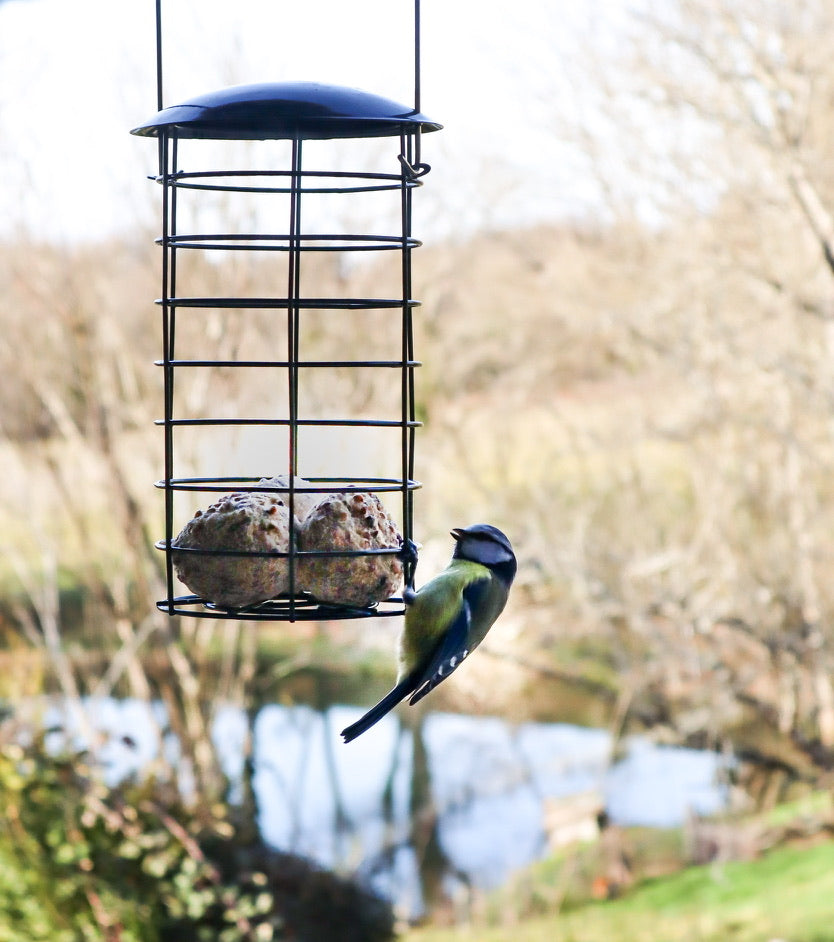
Bringing birds to your garden
For as long as I can remember, I’ve been the sort of person who wanted to save the Amazon rainforest or protect the polar bears. I’ve always had a love for nature and all the wonderful beauty it provides. But over the last year, my ideas have grown into something new. It started with a book—a book that made me look at the UK differently. England had always seemed a bit dull to me in terms of wildlife. No elephants or tigers. No exotic birds or giant redwood trees. But one simple book about temperate rainforests in the South West made me fall in love with natural England and all its native wildlife.
I’ve been through phases of putting up bird feeders before, but this time it’s not just because I enjoy seeing birds in my garden. This time, it’s because I want to help our beautiful native birds that are in decline. And as an environmental science student, I couldn’t help but do a little experiment while I was at it, too.
First, a little bit about my garden. I’m lucky enough to have the space for a small pond, vegetable patch, a few small trees, and enough grass to keep my husband happy with a mower. It’s by no means large, but I have more room than most modern houses’ gardens. But size doesn’t matter when it comes to bird feeders, as there’s a style to suit them all.
We’ve always left space for wildlife in our garden—the sort of people who have a wood pile in the corner for insects, won’t cut down all the nettles because some butterfly species lay their eggs on them, and leave the grass an extra few weeks before cutting it. It’s a bit scruffy, but that’s how we like it. That being said, I thought the diversity in my garden would be, at the very least, good. It’s only when you take a deeper look into UK native species that you realise British gardens are lacking—mine included.
A few weeks ago, I pulled out my phone, downloaded a bird ID app, grabbed a notebook, and recorded the birds in my garden. It wasn’t good. Not good at all. For 15 minutes at a time, I watched for birds and had the app ID them for me. I repeated this a few times to make sure it wasn’t bad weather or just a quiet day. The app—which I will say is not 100% accurate—recorded six species, and that’s not all in one go; that’s over all the days I recorded. Starlings featured highly, followed by pigeons and doves, then house sparrows, and finally crows and seagulls.
So, up went a bird feeder at the end of my garden where I could see it from the kitchen window. I paid less than £10 for the feeder and a 1kg bag of wild bird food from a certain bargain home-goods shop. It took only a few days before the sparrows got used to it and started to eat from it. And then came the blue tits, great tits, and coal tits—all arguing over the one feeder—so I had to get another. It’s now been about a month, and the species in my garden have tripled. The six I had before, plus the three tits, but now also long-tailed tits, grey wagtails, white wagtails, blackcaps, redwings, dunnocks, goldfinches, greenfinches, and song thrushes—all in one 15-minute recording. The app has even picked up a firecrest, though I haven’t actually seen it yet. My garden became so busy with birds in one month that I can’t even count how many of each species I have any more.
So, if you want to help a few more birds get through the cold winter months—or simply love seeing them in your garden—give a bird feeder or two a go. You can let me know if you notice any difference on the English Country Gardens community page. One last thing: if you have any reported cases of bird flu or other diseases affecting birds in your area, it’s a good idea to take feeders down for a bit to help stop the spread. Or if you really can’t do without the sight of birds, maybe only half-fill the feeders and give them a good wash between each top-up.
Thanks for reading.
Jackie

Written by My Store Admin

Leave a comment
This site is protected by hCaptcha and the hCaptcha Privacy Policy and Terms of Service apply.