
Article: Sweet peas (Lathyrus odoratus)
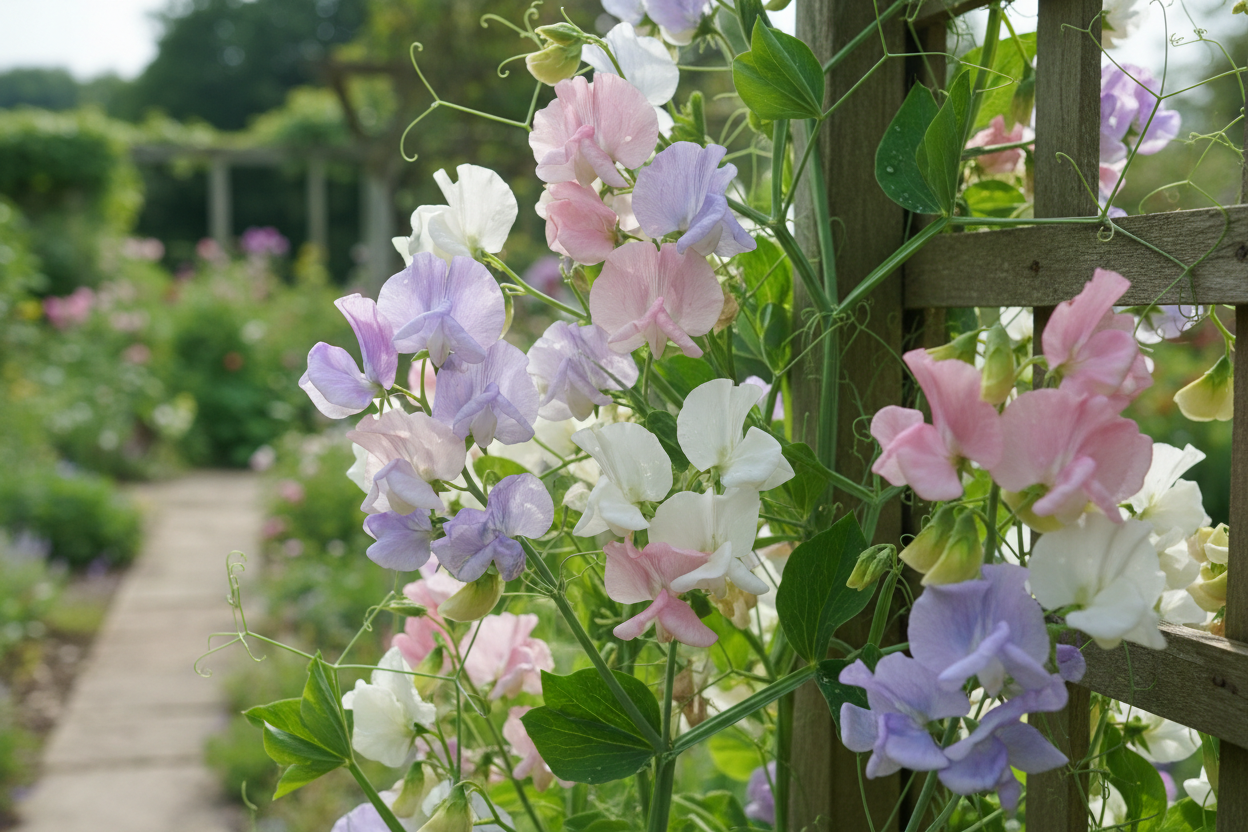
Sweet peas (Lathyrus odoratus)


FRAGRANT ° ROMANTIC ° ICONIC COTTAGE GARDEN CLIMBER
Few plants evoke the charm of an English country garden quite like Lathyrus odoratus, the beloved sweet pea. Celebrated for their nostalgic fragrance, pastel shades and long flowering season, sweet peas are a gardener’s favourite for cutting gardens, trellises and summer borders.
This guide covers everything you need to grow sweet peas beautifully — from sowing to support, soil to scent.
ABOUT SWEET PEAS
-
Botanical name: Lathyrus odoratus
-
Type: Hardy annual (grown fresh each year)
-
Growth habit: Climbing vine (up to 1.8–2.4m depending on variety)
-
Origin: Sicily (first cultivated in England in the late 17th century)
-
Best for: Cottage gardens, obelisks, arches, cut-flower displays
-
Fragrance: Strong, sweet, nostalgic — one of the most fragrant annuals
IDEAL GROWING CONDITIONS
Soil
Sweet peas thrive in:
-
Moist but well-drained soil
-
Rich, fertile ground amended with compost or aged manure
-
Neutral to slightly alkaline pH (they dislike acidic soil)
Top Tip:
Add a generous layer of organic matter before planting — sweet peas are hungry feeders!
Light
-
Full sun is essential (at least 6 hours a day)
-
Sheltered spot preferred to protect delicate stems from strong winds
Temperature
-
Cool-season growers
-
They perform best in spring and early summer before the heat sets in
WHEN TO SOW SWEET PEAS
Autumn Sowing (mid-October to November)
-
Produces the strongest plants
-
Earlier flowering in late spring
-
Best for mild regions
Spring Sowing (January–March)
-
Ideal for most UK gardeners
-
Sow under cover in winter (unheated greenhouse, windowsill, or cold frame)
Direct Sowing
-
Late March–April in mild climates
-
Less reliable than sowing in pots
HOW TO SOW SWEET PEAS
-
Use deep pots or root trainers (sweet peas hate root disturbance).
-
Soak seeds for 12 hours before sowing to speed germination.
-
Plant 1–2 seeds per pot, about 2cm deep.
-
Keep in a bright, cool place (not warm — cool is best for sturdy growth).
-
Pinch out the tips when seedlings reach 10–15cm to encourage bushy growth.
-
Harden off plants outdoors in April.
PLANTING OUT
When:
-
Late March–May, depending on weather
-
After hardening off for 7–10 days
Position:
-
A sunny, open, well-drained bed
-
Space plants 20–25cm apart
Important:
Plant firmly and water in deeply. Sweet peas like cool roots — a mulch helps them stay happy.
SUPPORTING SWEET PEAS
Sweet peas are natural climbers but need something to twine around.
Excellent supports include:
-
Obelisks (oak or steel)
-
Wigwam structures
-
Trellis panels
-
Archways
-
Netting or chicken wire
They climb by tendrils, so thin linear supports work best.
Top Tip:
Tie them loosely with soft twine at the start — once they latch on, they climb independently.
CARING FOR SWEET PEAS
Watering
-
Water deeply 2–3 times a week during dry spells
-
Never allow roots to dry out completely
-
Consistent moisture = abundant blooms
Feeding
-
Start feeding weekly once buds appear
-
Use a potash-rich fertiliser (like tomato feed)
-
Avoid high-nitrogen feeds — they produce foliage over flowers
Deadheading
-
Pick flowers every few days!
Sweet peas stop blooming if seed pods form.
Pest Watch
-
Aphids
-
Slugs & snails (especially young plants)
-
Mildew in hot weather
Mulching and good airflow help prevent issues.
MOST POPULAR VARITIES
-
‘Cupani’ — the original bicolour sweet pea with strong scent
-
‘Matucana’ — intense fragrance, rich purple tones
-
‘Spencer Mix’ — large, ruffled blooms in many colours
-
‘Old Fashioned Mix’ — smaller flowers, incomparable scent
-
‘High Scent’ — one of the strongest scents of all
-
‘Royal Family’ Series — heat-tolerant with long stems for cut flowers
TOP TIPS FOR SUCCESS
-
Sow in autumn for the strongest plants
-
Choose a sunny, open position
-
Pinch out seedlings to encourage branching
-
Provide tall, sturdy support early
-
Keep roots cool with mulch
-
Pick flowers often to prolong blooming
-
Feed weekly during flowering
-
Water deeply and consistently
SUMMARY
Sweet peas (Lathyrus odoratus) are a classic of the English country garden, bringing together fragrance, elegance and a timeless romantic charm. They are easy to grow with the right support and thrive when given rich soil, sunshine and regular picking. Whether grown up an obelisk, trained along a trellis, or used to fill a cutting garden, sweet peas are one of the most rewarding plants you can grow.

Written by My Store Admin
Leave a comment
This site is protected by hCaptcha and the hCaptcha Privacy Policy and Terms of Service apply.