
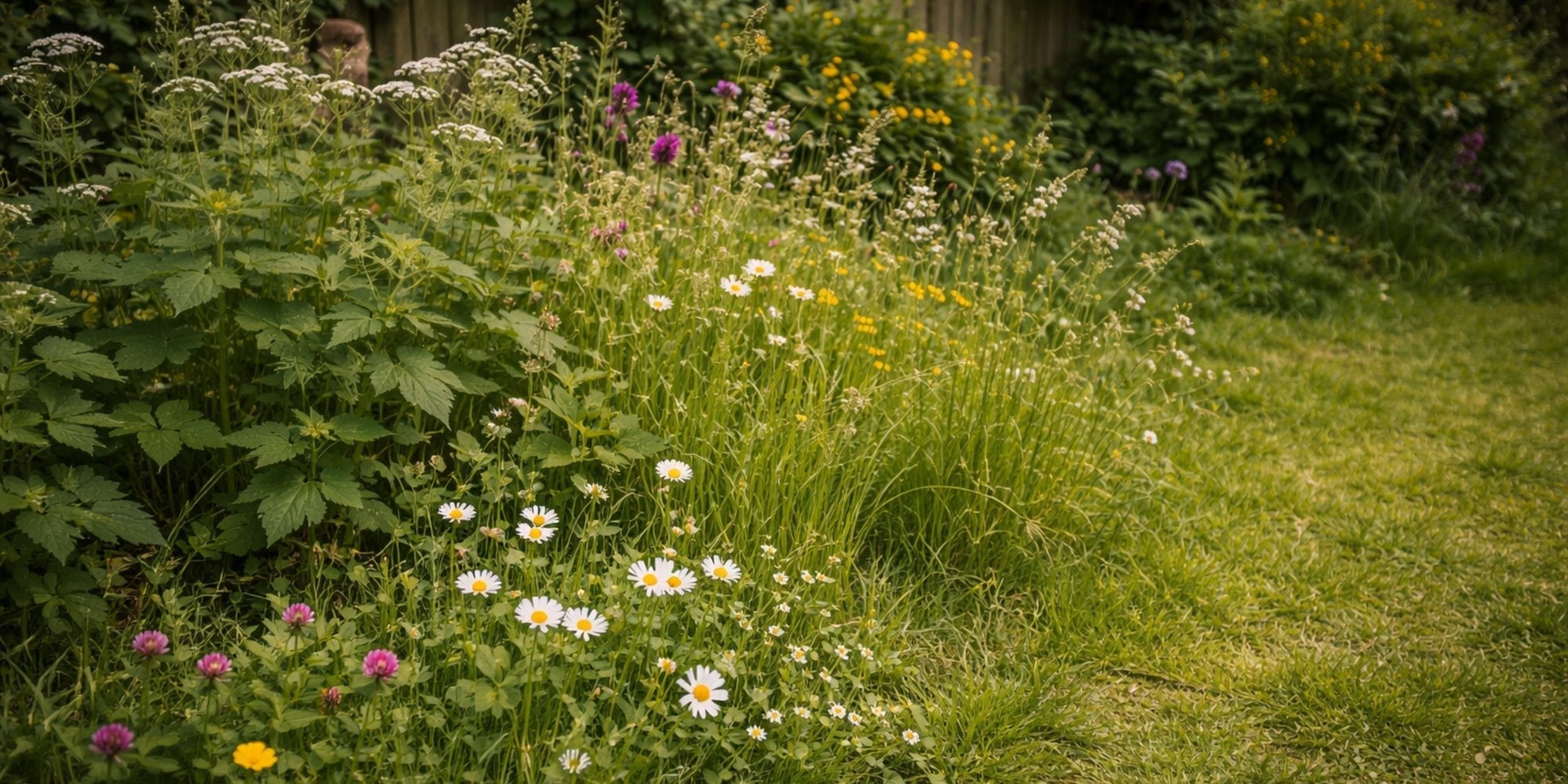
Rewilding the English Garden
Small acts in individual gardens can shape the wider landscape. Across Britain, millions of modest gardens together form one of the country’s most important habitats for wildlife.
Rewilding is a word that is used often today, but at heart it describes something very simple.
For centuries the English garden was never separate from nature. Meadows were allowed to seed, hedgerows sheltered birds and insects, and the quieter corners of a garden were often left to follow their own rhythm. The garden was not something imposed upon the landscape, but something that lived within it.
Modern gardening gradually moved in another direction. Lawns became tidier, borders more controlled, and the expectation grew that a garden should be neat, predictable, and carefully managed. In many places that sense of balance between cultivation and nature was quietly lost.
Rewilding is often misunderstood as abandoning the garden altogether. In truth it is something much gentler. It is about restoring balance.
It asks us to garden with the landscape rather than against it. To allow certain places to grow a little more freely. To plant flowers that welcome pollinators. To accept that a healthy garden is not always perfectly tidy.
The English garden tradition has always held space for this way of thinking. Cottage gardens, orchard meadows, hedgerows and field margins were never designed solely for appearance. They were places where wildlife and cultivation existed together.
In recent years the idea of rewilding has gained renewed attention, but its principles are not new. They are, in many ways, a return to the quiet wisdom that has shaped gardens for generations.
The Power of the Individual Garden

The real power of this movement lies in something remarkably simple: the individual garden.
Across Britain there are more than twenty million gardens. Some are large, some are small, and many are no more than a modest patch behind a house. Yet taken together they form one of the largest networks of green space in the country.
If each of those gardens leaves a small corner for nature, plants a few flowers for pollinators, or allows a patch of land to grow a little more freely, the combined effect becomes extraordinary.
What might appear insignificant in one garden becomes powerful when repeated across millions.
A few square metres left uncut in a lawn may allow wildflowers to return. A border planted with nectar-rich flowers may feed countless bees and butterflies throughout the summer. A small hedge may provide shelter for birds through the winter months.
These are quiet changes, but they accumulate.
Even small acts help — allowing a few dandelions to flower in the lawn, leaving a piece of dead wood at the back of a flower bed, or simply accepting that parts of a garden can remain a little more natural.
To a gardener these may seem like minor decisions. To wildlife they can make an enormous difference.
The simple presence of dead wood, for example, supports a remarkable range of insects and fungi. Those insects in turn become food for birds and other animals. A small log left at the edge of a border may quietly become part of an entire ecosystem.
Likewise, flowers that many gardeners have traditionally regarded as weeds often provide some of the earliest food for pollinators in spring. Dandelions, clover and other familiar plants offer nectar when few other sources are available.
A Landscape of Connected Gardens

One of the most important aspects of wildlife-friendly gardening is connectivity. Wildlife does not recognise the boundaries between gardens. A hedgehog wandering through a neighbourhood may pass through dozens of gardens in a single evening.
When gardens are completely sealed off from one another, those natural movements are interrupted. But when simple passageways are allowed between neighbouring gardens, they begin to form quiet corridors through which wildlife can move.
A single garden may seem small, but when joined with many others it becomes part of a much larger landscape.
In practical terms, rewilding a garden may be as simple as allowing wildflowers to establish, choosing plants that support pollinators, or creating spaces where wildlife can move freely and find shelter. These small, considered changes form the foundation of a truly wildlife-friendly garden.
At English Country Gardens we believe the most beautiful gardens are those that welcome life. Gardens where bees move freely among the flowers, where birds find shelter in the hedgerows, and where wildflowers quietly return to places they have not grown for years.
These gardens are not untidy. They are alive.
They recognise that the purpose of a garden is not simply to display plants, but to nurture a living landscape.
Rewilding, in this sense, is not a dramatic act. It is not something that requires grand changes or large areas of land. It begins with small decisions made by individual gardeners, repeated quietly across the country.

Sometimes the most thoughtful thing a gardener can do is simply leave a little space for nature to find its way back.
Because when millions of small gardens make room for nature, the countryside begins to breathe again.

Written by Simon Stevens

Leave a comment
This site is protected by hCaptcha and the hCaptcha Privacy Policy and Terms of Service apply.