

Working With the Garden, Not Against It
There is a tendency, particularly at this time of year, to feel that the garden requires correction.
New growth appears uneven. Certain plants move ahead, while others seem slow to return. Aphids gather on soft shoots. Spaces feel incomplete.
The instinct is often to intervene — to adjust, to tidy, to bring things back into line.
But not everything in the garden needs correcting.
Some of the most important shifts happen when we choose to observe rather than act immediately. To allow the season to unfold a little further before deciding what is needed.

Aphids, for example, arrive early and often in numbers. They can appear excessive, drawing attention to themselves in a way that feels disproportionate.
And yet, in time, they bring with them what feeds on them — ladybirds, hoverflies, and small birds moving through the garden. What begins as imbalance gradually settles into something more stable.
This is not to suggest that intervention has no place.
But timing matters.

A garden rarely benefits from being brought under control too quickly. There is a difference between guidance and interruption — between shaping something over time, and responding too early to what may only be a temporary phase.
Working with the garden requires a certain patience.
An understanding that not everything reveals itself at once, and that some of the most effective decisions are those made slightly later, when the direction of growth is clearer.

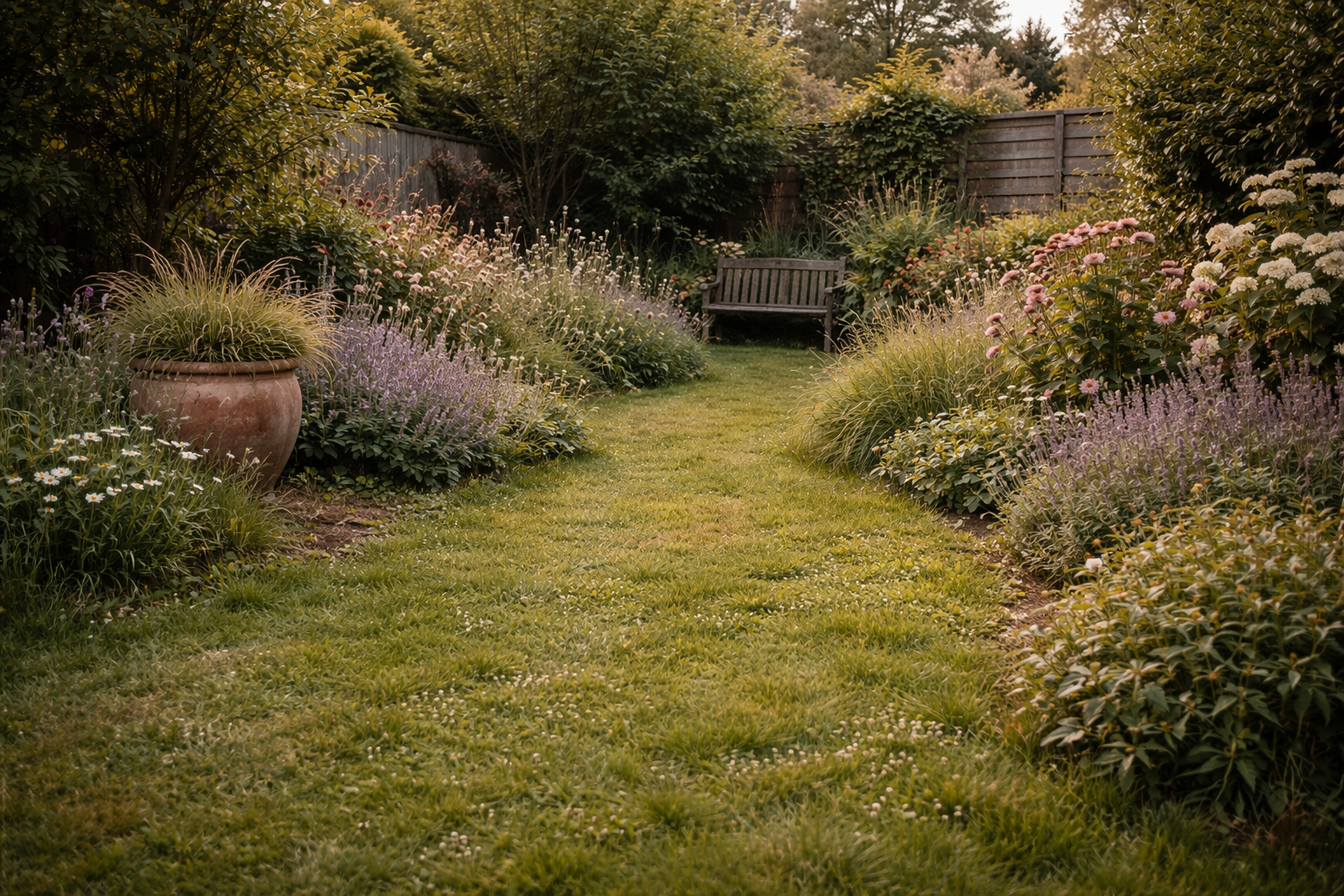
In this way, the garden becomes less a series of problems to be solved, and more something to be read.
Observed carefully. Adjusted lightly.
And allowed, wherever possible, to find its own balance.

Written by Simon Stevens


Leave a comment
This site is protected by hCaptcha and the hCaptcha Privacy Policy and Terms of Service apply.